
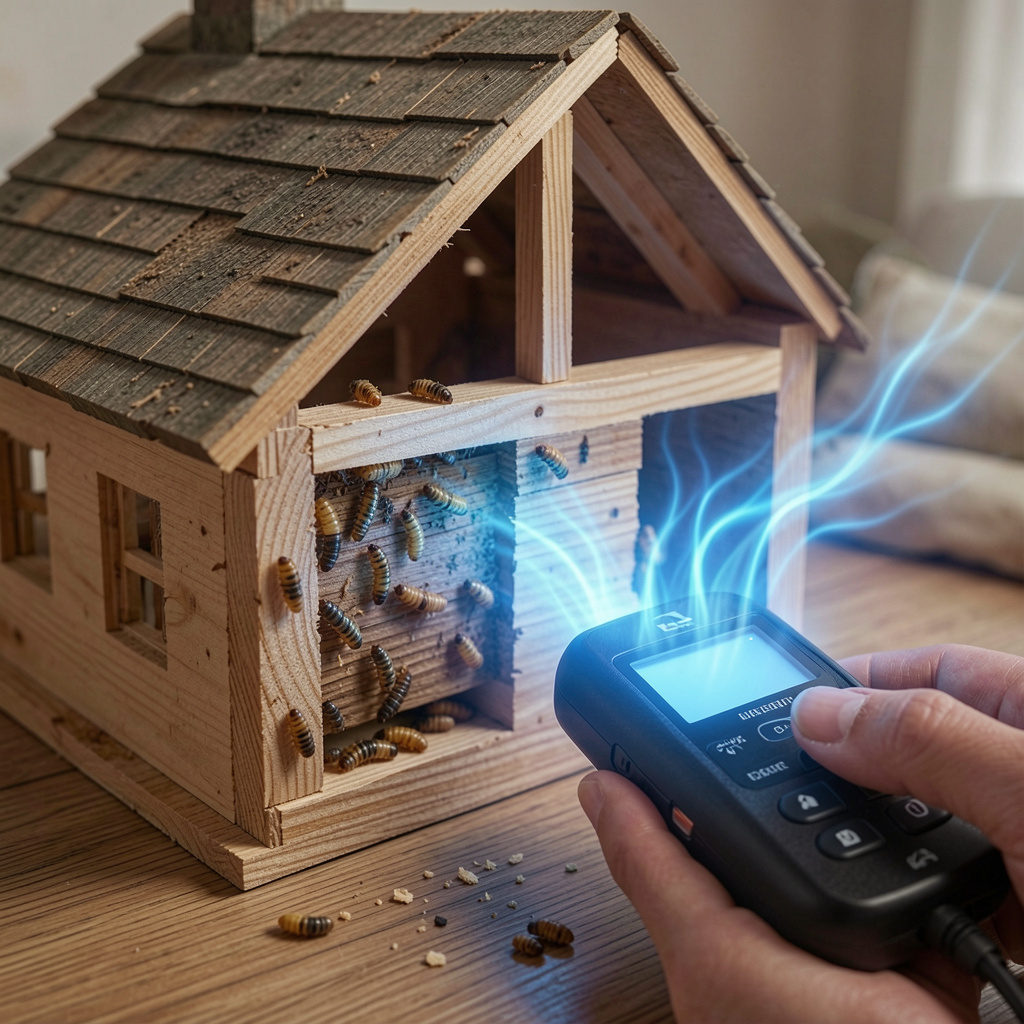
Woodworm infestations can seriously damage furniture, roof timbers, floor joists, and structural beams if left untreated. Because wood-boring beetle larvae spend years hidden inside timber, choosing an effective treatment method is essential to protect your property and avoid costly repairs.
Two modern, chemical-free treatment options that use heat instead of pesticides are microwave woodworm treatment and heat tenting. While both methods rely on elevated temperatures to eliminate insects, they work in very different ways and are designed for different situations.
Understanding the differences between these technologies can help homeowners, property managers, and conservation professionals choose the most appropriate treatment. In this guide, we’ll compare microwave technology and heat tenting, explain how each method works, discuss their advantages and limitations, and explore when each option may be the better choice.
Understanding Woodworm
Despite its name, woodworm is not actually a worm. The term refers to the larvae of several species of wood-boring beetles, including:
- Common Furniture Beetle (Anobium punctatum)
- Deathwatch Beetle (Xestobium rufovillosum)
- House Longhorn Beetle (Hylotrupes bajulus)
- Powderpost Beetles (Lyctus species)
Adult beetles lay eggs in cracks and crevices of timber. After hatching, the larvae tunnel through the wood while feeding on cellulose. Depending on the species, they may remain hidden inside the timber for two to five years, or even longer.
Most woodworm damage occurs during this hidden larval stage.
What Is Microwave Woodworm Treatment?
Microwave woodworm treatment is a chemical-free pest control method that uses controlled electromagnetic energy to generate heat inside infested timber.
Professional equipment directs microwave energy into the affected wood, causing water molecules within the timber to vibrate rapidly. This process, known as dielectric heating, raises the internal temperature to approximately 55–60°C (131–140°F), which is lethal to:
- Woodworm larvae
- Beetle eggs
- Pupae
- Adult beetles hidden inside the timber
The treatment is highly targeted and focuses on specific areas of infestation.
What Is Heat Tenting?
Heat tenting, also known as whole-structure heat treatment in many pest control applications, involves enclosing an entire structure—or a large section of it—and raising the ambient temperature to levels that eliminate pests.
Industrial heaters and monitoring equipment are used to circulate heated air throughout the enclosed area until the target temperature is reached and maintained for the required time.
Because the entire space is heated, heat tenting is typically used for widespread infestations rather than isolated problem areas.
How the Two Methods Differ
Although both methods rely on heat, they deliver it in different ways.
Microwave Treatment
Microwave technology generates heat inside the timber, directly targeting the area where woodworm larvae live.
Heat Tenting
Heat tenting raises the temperature of the surrounding air, which then warms furniture, walls, floors, and timber over time.
This distinction makes microwave treatment especially effective for localized infestations, while heat tenting is better suited to treating larger enclosed spaces.
Treatment Area
Microwave Technology
Microwave equipment is designed for:
- Roof beams
- Floor joists
- Timber framing
- Antique furniture
- Staircases
- Localized structural timber
It allows technicians to focus on individual areas without treating the entire building.
Heat Tenting
Heat tenting is generally used when:
- Multiple rooms are affected.
- The infestation is widespread.
- A whole structure requires treatment.
- Large numbers of wooden items need simultaneous treatment.
Chemical Use
Both methods share an important advantage:
Neither relies on chemical pesticides to eliminate wood-boring insects.
This makes both options attractive for:
- Environmentally conscious homeowners
- Museums
- Heritage buildings
- Homes with children
- Pet owners
Precision
Microwave treatment offers a high level of precision.
Technicians can concentrate treatment on a single beam, piece of furniture, or localized infestation without unnecessarily heating unaffected areas.
Heat tenting is much broader in scope because it heats the entire enclosed environment.
Impact on Occupants
Both treatment methods generally require temporary restrictions on access to the treatment area while work is being carried out.
The exact arrangements depend on the size of the project, the building layout, and the treatment provider’s safety procedures.
Your contractor will explain when it is safe to re-enter the treated space.
Advantages of Microwave Technology
Microwave treatment offers several important benefits.
Targeted Treatment
Only affected timber is heated.
Chemical-Free
No insecticides or fumigants are required.
No Chemical Residues
There are no pesticide residues left on treated wood.
Minimal Disruption
Localized treatment often reduces disruption compared with whole-building heating.
Suitable for Heritage Timber
Historic beams, antique furniture, and valuable wooden features can often be treated without widespread intervention.
Advantages of Heat Tenting
Heat tenting also offers important advantages.
Whole-Area Coverage
Large treatment zones can be heated simultaneously.
Chemical-Free
No pesticides remain after treatment.
Useful for Extensive Infestations
Where infestations affect multiple areas, treating the entire enclosed space may be more practical than targeting individual locations.
Limitations of Microwave Treatment
While highly effective, microwave treatment has some limitations.
- It generally requires access to the affected timber.
- Large buildings may require treatment in multiple locations.
- Existing structural damage remains after insects are eliminated.
- It is best suited to localized infestations.
Limitations of Heat Tenting
Heat tenting also has practical considerations.
- Heating an entire structure requires specialized equipment.
- The process may take longer than localized microwave treatment.
- Heat-sensitive belongings may need to be protected or removed.
- Temperature must be carefully monitored throughout the structure.
Which Is Better for Heritage Buildings?
For many conservation projects, microwave treatment is often attractive because it allows professionals to target specific areas while preserving original materials and minimizing unnecessary intervention.
However, every listed or historic property should be individually assessed to determine the most appropriate treatment strategy.
Which Method Is Better for Furniture?
Microwave Treatment
Often suitable for:
- Antique furniture
- Valuable collections
- Museum artifacts
- Localized infestations
Heat Tenting
May be appropriate when numerous furniture items require treatment together in a controlled environment.
The best approach depends on the value of the furniture, the extent of the infestation, and access to the affected timber.
Cost Considerations
Treatment costs vary depending on:
- Property size
- Number of affected areas
- Accessibility
- Timber condition
- Extent of infestation
Because microwave treatment focuses on localized areas, it may be more economical for smaller infestations. Heat tenting can be more practical when a much larger treatment area is involved.
A professional inspection is the best way to determine the most suitable and cost-effective option.
Preventing Future Woodworm Problems
Regardless of the treatment method, prevention remains essential.
Protect your timber by:
- Repairing roof leaks promptly.
- Improving ventilation.
- Reducing indoor humidity.
- Keeping timber dry.
- Inspecting roof spaces annually.
- Monitoring furniture for fresh frass and exit holes.
- Addressing damp conditions early.
Healthy timber is significantly less attractive to wood-boring beetles.
When Should You Contact a Professional?
Professional advice is recommended if:
- Structural timber is affected.
- Fresh frass continues appearing.
- New exit holes develop.
- Valuable antiques require treatment.
- You’re unsure which heat treatment is appropriate.
- You own a listed or historic property.
A qualified timber preservation specialist can inspect your property, identify the extent of the infestation, and recommend the most suitable treatment method.
Common Myths About Heat-Based Woodworm Treatments
Myth 1: Microwave Treatment and Heat Tenting Are the Same
Fact: Both use heat, but microwave treatment heats the timber internally, while heat tenting heats the surrounding environment.
Myth 2: Heat Always Damages Timber
Fact: Professional systems carefully monitor temperatures to eliminate insects while minimizing the risk of damage to sound timber.
Myth 3: One Treatment Prevents Future Infestations Forever
Fact: Any treatment eliminates the current infestation, but future infestations can occur if new beetles gain access to untreated timber. Ongoing maintenance and moisture control remain essential.
Conclusion
Microwave technology and heat tenting are both effective, chemical-free approaches to woodworm treatment, but they serve different purposes. Microwave treatment is highly targeted, using dielectric heating to eliminate insects inside specific sections of timber with minimal disruption. Heat tenting, on the other hand, warms an entire enclosed space and may be more appropriate for widespread infestations affecting multiple areas.Visit online https://www.shashel.eu for more details .
Choosing between the two depends on factors such as the size of the infestation, the accessibility of the timber, the type of property, and conservation requirements. A professional assessment will help determine which method is best suited to your situation. Combined with routine inspections, proper moisture control, and regular maintenance, either approach can play an important role in protecting your property from long-term woodworm damage.